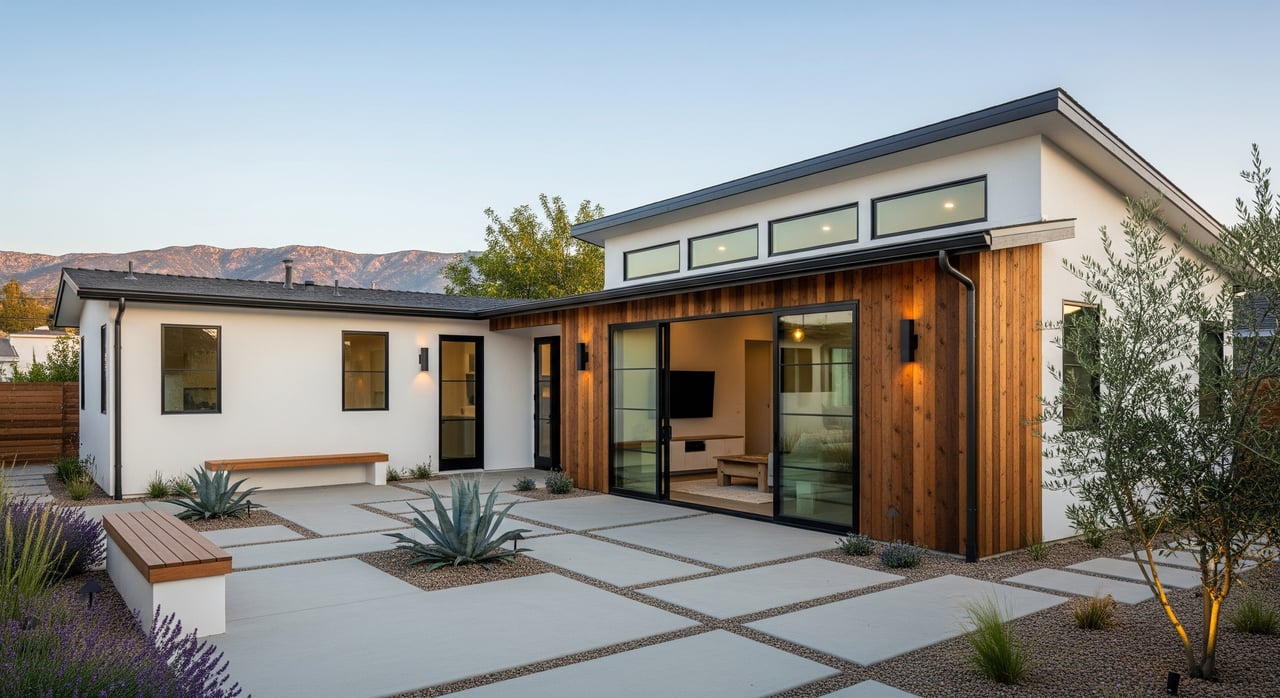
Thinking about building an accessory dwelling unit on your Loma Linda property? You’re not alone. Many San Bernardino County homeowners are exploring ADUs to create multigenerational space, boost long-term rental income, or add flexible square footage. The process can feel confusing at first, but once you understand the basics, it becomes manageable.
In this guide, you’ll learn how ADU rules work in California, what to confirm locally in Loma Linda, typical timelines and costs, parking and utility considerations, and the simple steps to move your idea forward. Let’s dive in.
What counts as an ADU in California
California sets the statewide foundation for ADU approvals and timelines. Cities like Loma Linda must follow these rules, and they can add objective standards you’ll need to meet.
ADU types to know
- Detached ADU: A separate structure on the same lot as your main home.
- Attached ADU: An addition or internal space attached to the main residence.
- Junior ADU (JADU): Up to 500 sq ft created within an existing single-family home with a limited kitchenette.
- Conversion ADU: A conversion of an existing accessory structure like a garage or basement.
Key state allowances
- Ministerial approvals: If your ADU meets the objective standards, the City must review it through a streamlined, ministerial process.
- Parking caps and waivers: State law limits local parking requirements and provides waivers in specific situations like certain transit proximity or if you convert an existing structure.
- Owner-occupancy: Many owner-occupancy rules have been reduced at the state level. Confirm the current local practice when you apply.
- Building and energy codes: All ADUs must meet California Building Standards and Title 24 energy requirements. Local fire, health, and utility rules also apply.
What Loma Linda homeowners should confirm first
Every lot is different. Before you sketch plans, make sure your site can accommodate the ADU you have in mind.
Lot fit and feasibility
- Zoning: Confirm whether your parcel’s zoning allows your desired ADU type.
- Setbacks, height, coverage: Check the City’s objective standards for detached ADU height, setbacks, and lot coverage.
- Existing structures: Identify conversion opportunities, including garages or outbuildings.
- Topography and drainage: Sloped sites may need grading, retaining walls, or drainage work.
- Trees and vegetation: Note any protected trees and stormwater requirements.
- HOA rules: If your property is in an HOA, review CCRs and request approval if needed.
A plot plan or site survey is a smart early step. Ask the City for an ADU handout or checklist to confirm the basics for your parcel.
Parking and access in Loma Linda
Parking requirements are one of the biggest homeowner concerns. State law limits what cities can require. In many cases, the City cannot require more than one parking space for an ADU, and there are circumstances where parking can be waived, including certain transit-proximate locations and conversions of existing structures.
Plan for safe, practical on-site access. Consider driveway width, emergency access, and a clear pedestrian path to the ADU. Ask City planning if existing driveway or garage spaces can count toward any required parking and whether a waiver applies to your lot.
Utilities and connections
Getting utilities right early will save time and money later.
Electrical and gas
Loma Linda homes are typically served by regional providers such as Southern California Edison for electricity and Southern California Gas Company for gas. Your existing electrical service may need a capacity check. Larger ADUs or all-electric designs could require a panel or meter upgrade. If you plan on gas appliances, confirm service availability and tie-in requirements.
Water and sewer
Verify whether your home is on the City sewer system or a special district. You may need permits for a sewer lateral connection or upsizing, which can affect costs and timelines. If your property uses a septic system, consult county environmental health early. Some ADUs on septic require system upgrades or replacement.
Stormwater and grading
New foundations or substantial site work may trigger stormwater or grading permits. Budget for erosion control, drainage solutions, or civil engineering if your site slopes or has water flow issues.
Fire, safety, and inspections
The local fire authority will review access, egress, and any fire protection requirements. Building & Safety will oversee structural, electrical, plumbing, mechanical, and final inspections. Expect inspections at defined milestones: foundation, framing, rough-ins, drywall, and final.
Ask for a pre-application meeting with building and fire staff. Early guidance helps you avoid multiple plan revisions and keeps your project moving.
Fees and timeline: what to expect
Timelines vary with design complexity, permit workload, and construction scope. Use this sequence as a planning guide.
Phase 0 — Preliminary feasibility (1–4 weeks)
- Confirm zoning and ADU type options.
- Order a site survey or check your plat map.
- Contact utilities for capacity and upgrade estimates.
- Review HOA CCRs if applicable.
Phase 1 — Design and engineering (4–12+ weeks)
- Create a conceptual layout and floor plan.
- Prepare architectural drawings and structural engineering.
- Add civil engineering if grading or drainage changes are needed.
- Complete Title 24 energy calculations and MEP design.
- Obtain cost estimates and select a contractor or design-build team.
Phase 2 — Permits and plan check (4–24+ weeks)
- Submit a full permit set to City planning and building.
- Respond to plan check comments and resubmit as needed.
- Secure utility permits for meter upgrades and sewer/water connections.
- Complete fire review and any required mitigation.
Phase 3 — Construction (8–36+ weeks)
- Complete site prep, foundation, framing, and rough-ins.
- Schedule inspections at each stage.
- Finish interiors, then complete final inspections.
- Connect utilities and obtain the certificate of occupancy or permit final.
Phase 4 — Occupancy and compliance (immediate)
- If renting, follow local rental rules and obtain any required licenses or tax registrations.
- Update your insurance and finalize any loan documentation.
Budget, financing, taxes, and insurance
ADU costs vary widely based on size, finishes, and site work. Conversions usually cost less per square foot than detached new builds because they start with an existing shell and utilities. Grading, retaining walls, septic upgrades, meter upsizes, and fire protection can add to your budget.
Explore financing early if it shapes your design. Options to discuss with your lender include cash savings, a HELOC, a cash-out refinance, and construction or renovation loans. Some state or local programs have existed for ADUs, so ask your lender about current options.
If you plan to rent your ADU, rental income is taxable. A CPA can help you document deductions like depreciation and eligible expenses. Adding living area can affect assessed value, so check with the San Bernardino County Assessor’s Office on potential property tax impacts. Before occupancy, notify your insurance carrier to adjust your policy or add a landlord endorsement if you will rent the unit.
Rental rules and occupancy
Long-term rentals are commonly allowed. Short-term rentals are regulated at the local level and may have restrictions. Always confirm Loma Linda’s current municipal code and any transient occupancy tax rules before listing a short-term rental. You can move in or rent after you pass final inspection and receive a certificate of occupancy or permit final.
Avoid common pitfalls
- Assuming state law removes all local requirements. You still need to meet objective local standards and pay applicable fees.
- Underestimating utility upgrades. Meter upsizes and sewer laterals can be significant.
- Overlooking septic constraints. If your property uses septic, confirm feasibility early.
- Skipping pre-application meetings. Early City feedback reduces revisions and delays.
- Relying on rough estimates. Get permit-quality plans and formal bids before committing to costs.
Your local action plan
Follow these steps to move from idea to permits with fewer surprises.
Step 1: Confirm the basics
- Request a pre-application meeting with the City of Loma Linda Planning Division and Building & Safety.
- Ask for an ADU checklist or handout and zoning confirmation for your parcel.
- Get a preliminary fee estimate for plan check, permits, and utility connections.
- Confirm which utilities serve your property and how to request capacity checks.
Step 2: Gather documents
- Plot or site plan, survey, and property deed.
- Existing floor plans and elevations if available.
- HOA CCRs if applicable.
- Recent utility bills and meter information.
- Records of prior permits or septic documentation.
Step 3: Line up your team
- Architect or designer with ADU experience.
- Licensed general contractor or a design-build firm.
- Structural engineer for new foundations and framing.
- Civil or geotechnical engineer if grading or retaining walls are needed.
- Title 24 energy consultant or HERS rater.
- Optional: permit expeditor, plus a CPA and your insurance agent.
Step 4: Map your budget and financing
- Compare a garage conversion vs a detached build.
- Request utility upgrade estimates early.
- Discuss HELOC, refinance, or construction loan options with your lender.
Step 5: Submit, build, and finalize
- Submit a complete permit set to speed plan check.
- Stay responsive to City comments.
- Schedule inspections promptly to keep construction moving.
- Obtain your certificate of occupancy or permit final before move-in or rent-up.
How a local agent can help your bigger plan
An ADU is both a construction project and a real estate decision. If you plan to rent, consider how potential income fits your long-term goals. If you plan to sell, an ADU can influence buyer appeal and pricing strategy. If you’re buying your next home, understanding ADU feasibility can help you choose a better lot and avoid costly surprises.
When you want to talk through timing, resale strategy, or how an ADU could support your next move, connect with a local expert who knows the Inland Empire market. Schedule a free consultation with Casey Garduno to discuss your goals and next steps.
FAQs
What is the difference between an ADU and a JADU in California?
- An ADU can be detached or attached and varies in size by local standards, while a Junior ADU is created within an existing single-family home and is typically up to 500 sq ft with a limited kitchenette.
Do Loma Linda ADUs always need extra parking?
- Not always. State law caps parking requirements and provides waivers in certain cases like specific transit proximity or when converting existing structures. Confirm how the City applies these rules to your parcel.
How long does a typical ADU project take in Loma Linda?
- Many projects span several months: 1–4 weeks for feasibility, 4–12+ weeks for design, 4–24+ weeks for permits, and 8–36+ weeks for construction, depending on scope and City workload.
Will I need separate utility meters for my ADU?
- Not necessarily. Metering depends on utility policies, design choices, and financing requirements. Separate meters may trigger fees or upgrades, so check with your providers early.
Can I rent my ADU short-term in Loma Linda?
- Long-term rentals are commonly allowed, but short-term rentals are locally regulated. Review Loma Linda’s current municipal code and any transient occupancy tax rules before listing.
Will building an ADU raise my property taxes?
- Adding living area can affect assessed value. Contact the San Bernardino County Assessor’s Office to understand potential impacts for your specific property.